Even a well-installed paver surface can run into trouble over time — settling, staining, shifting, or damage from tree roots and heavy loads. Huntsville Pavers provides paver repair services for homeowners throughout Huntsville, AL, fixing everything from a few sunken pavers on a walkway to full base failures on a driveway, so you don’t have to live with an uneven, unsafe, or unsightly surface.
Common Paver Problems We See Around Huntsville
Because so much of the Tennessee Valley sits on expansive clay soil, we see a fairly consistent set of issues on paver surfaces throughout the Huntsville, AL area:
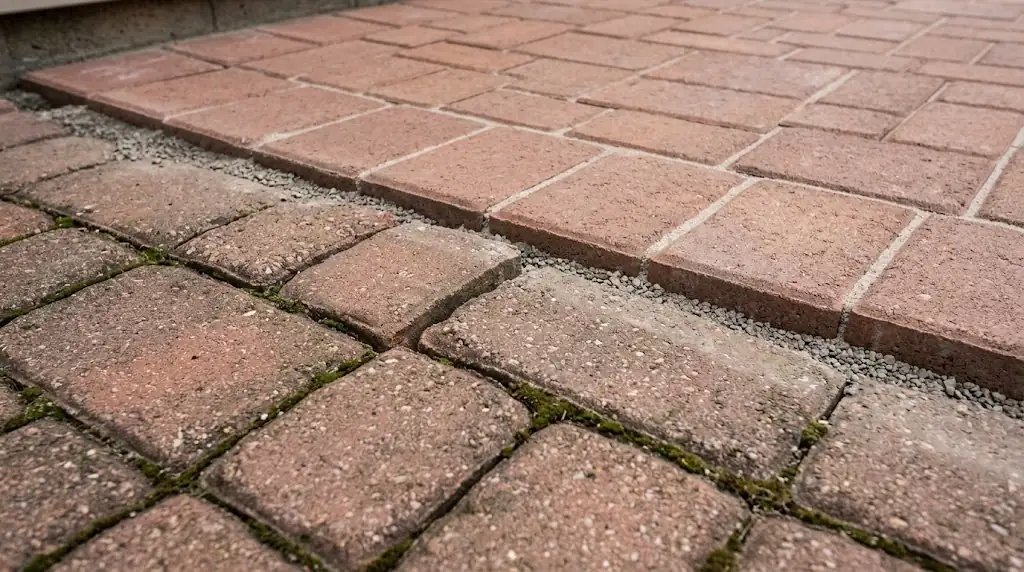
- Sunken or uneven pavers, usually caused by an inadequately compacted base settling over time, especially in high-traffic areas like driveways
- Shifting or spreading pavers, often the result of missing or failed edge restraints that were never installed correctly in the first place
- Weeds and grass growing between joints, which happens when joint sand erodes or wasn’t properly compacted during the original installation
- Cracked or chipped individual pavers, from heavy impacts, vehicle loads on surfaces not rated for them, or age-related wear
- Standing water and drainage issues, caused by improper grading or a base that has settled unevenly, leaving low spots that collect rain
- Staining from rust, oil, or organic growth, common on driveways and pool decks exposed to years of use
Many of these issues are the result of a hardscape that wasn’t built with a properly engineered base to begin with — something we see often when we’re called out to fix work from a previous installer who cut corners on excavation depth or base compaction.
Why DIY Fixes Usually Don’t Last
It’s tempting to pull up a sunken paver, toss in some extra sand, and pop it back into place. The problem is that this kind of fix addresses the symptom, not the cause. If a paver has settled because the base beneath it wasn’t compacted properly or has eroded due to a drainage issue, simply adding sand under that one paver will only buy a little time before it settles again — and often unevenly, making the problem worse. A proper repair means digging out the affected area down to the base layer, correcting whatever caused the failure in the first place — whether that’s inadequate compaction, a drainage problem, or root intrusion — and then rebuilding the base correctly before resetting the pavers.
Our Approach to Paver Repair
When we’re called out for a repair, we start by identifying the actual root cause rather than just addressing the visible symptom. A sunken section near a downspout, for example, is often a drainage issue as much as a base issue, and fixing it properly might mean redirecting water away from that area in addition to rebuilding the base. Similarly, pavers that have shifted along an edge usually point to a missing or failed edge restraint, which we’ll replace as part of the repair so the same problem doesn’t come back in a year or two.
For isolated cracked or stained pavers, we can often pull the affected units and replace them individually, matching the surrounding pattern and, where possible, sourcing matching material so the repair blends in rather than standing out as an obvious patch. For larger-scale settling across a driveway or patio, we may need to lift a broader section, rebuild the base properly, and reset the pavers — a more involved repair, but one that solves the problem for good rather than temporarily.
Re-Sanding and Joint Restoration
One of the most common — and most overlooked — paver maintenance needs is joint sand restoration. Over the years, rain, foot traffic, and pressure washing gradually erode the sand between pavers, which is what allows the surface to shift, weeds to take root, and ants to make a home in the joints. We offer joint sand restoration using polymeric sand, which hardens slightly once compacted and watered in, offering better resistance to erosion and weed growth than standard sand. This is often a simple, cost-effective service that restores stability to a paver surface that otherwise looks fine but has started to loosen up.
When to Consider Full Replacement Instead
Not every paver surface is worth repairing indefinitely. If a driveway or patio was installed with a base that was never adequate for its intended use — a common issue with older or budget installations throughout Huntsville, AL — repeated settling in multiple areas may be a sign that the underlying base needs to be rebuilt entirely rather than patched section by section. During our inspection, we’ll always give you an honest assessment of whether a targeted repair will hold up long-term or whether a more complete rebuild is the better investment.
Our Paver Repair Process
- On-site inspection — We assess the extent of the damage and identify the root cause, whether that’s base failure, drainage, root intrusion, or joint sand erosion.
- Repair plan and estimate — We explain what’s causing the issue and provide a clear estimate for the repair, including whether a targeted fix or broader rebuild makes more sense.
- Paver removal — Affected pavers are carefully lifted and set aside for reuse or matching, where possible.
- Base correction — We address the underlying cause, whether that means recompacting the base, improving drainage, or removing an intrusive root.
- Paver reset — Pavers are reset in their original pattern, with new joint sand applied and compacted for a stable, finished result.
- Final inspection — We walk the repaired area with you to confirm it’s level, stable, and blended in with the surrounding surface.
Don’t Let a Small Problem Become a Bigger One
A few sunken or shifting pavers rarely fix themselves, and waiting usually means a bigger repair down the road. Huntsville Pavers has the experience to diagnose the real cause of paver problems across Huntsville, AL and fix them properly the first time. Reach out through our contact page to schedule an inspection and repair estimate.