A quality paver installation is built to last for decades, but sealing is what keeps it looking as good in year ten as it did on day one. Huntsville Pavers provides professional paver sealing services for homeowners throughout Huntsville, AL, protecting driveways, patios, walkways, and pool decks from the sun, humidity, and heavy rainfall that North Alabama weather brings year-round.
What Sealing Actually Does
Paver sealer is a protective coating applied to the surface and joints of your pavers after installation or as part of routine maintenance. It’s not just a cosmetic step — a quality sealer does several jobs at once: it enhances and locks in the paver’s color, protects the surface from staining caused by oil, rust, and organic growth, helps joint sand resist erosion from rain and pressure washing, and reduces the ability of weeds and moss to take root between pavers. For a driveway, patio, or pool deck that sees years of sun exposure and Alabama humidity, sealing is one of the most cost-effective ways to protect a significant hardscape investment.
Why Sealing Matters More in North Alabama’s Climate
Huntsville’s climate puts real stress on unsealed paver surfaces. Long, humid summers create ideal conditions for algae and moss growth, especially in shaded areas or spots that don’t dry out quickly after rain. Frequent spring downpours wash out unprotected joint sand over time, which is what eventually allows pavers to shift and weeds to establish themselves in the gaps. UV exposure through our long, sunny summers can also gradually fade unsealed paver color, particularly on darker paver tones that absorb more heat and sun. A quality sealer creates a barrier against all of these issues, meaning less maintenance and a longer-lasting, better-looking surface overall.
Sealer Options: Matte, Satin, and Wet-Look Finishes
Not all sealers look the same once applied, and the right finish depends on your personal preference and the look of your paver style:
- Matte/natural finish sealers protect the surface without changing its appearance, ideal for homeowners who want the practical benefits of sealing without a noticeably different look.
- Satin finish sealers add a subtle sheen that slightly enhances paver color while still looking relatively natural.
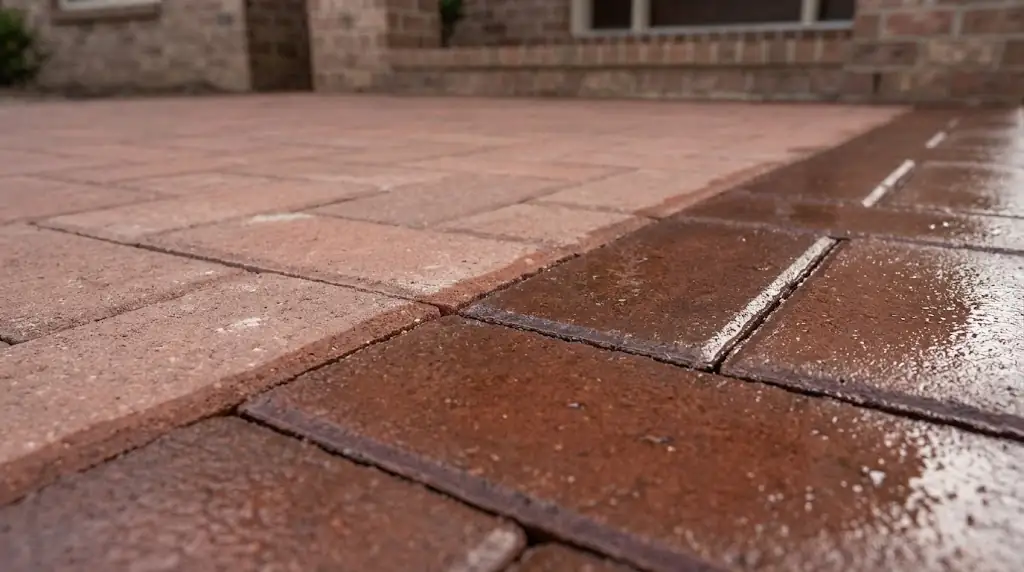
- Wet-look finish sealers give pavers a richer, deeper color and a glossy, just-rained-on appearance that many homeowners like for patios and pool decks in particular.
We’ll walk you through samples so you can see how each finish looks on your specific paver color and style before we move forward with a full application.
Sealing New vs. Existing Paver Surfaces
Timing matters when it comes to sealing. For a newly installed paver surface, we typically recommend waiting a short curing period — generally a few weeks to a couple of months, depending on weather conditions — to allow the joint sand to fully settle and any efflorescence (a natural, harmless mineral residue that can appear on new concrete pavers) to work its way out before sealing locks in the surface.
For existing paver surfaces that have never been sealed, or that were sealed years ago and are due for a fresh coat, we start with a thorough cleaning and inspection. Old, degraded sealer, built-up grime, and any organic growth need to be properly removed before a new coat is applied — sealing over a dirty or failing surface traps the problem underneath rather than solving it.
Our Paver Sealing Process
- Inspection and cleaning — We inspect the surface for existing damage, staining, or vegetation growth, and thoroughly pressure wash the pavers to remove dirt, algae, and old sealer residue.
- Repairs before sealing — Any loose, sunken, or damaged pavers are addressed before sealing, since sealing over an unstable surface only locks existing problems in place.
- Joint sand replenishment — Where joint sand has eroded, we refill and compact fresh polymeric sand so the sealer can properly bond and protect the joints.
- Drying period — We allow the surface to dry completely, since trapped moisture beneath a sealer coat can cause discoloration or bonding issues.
- Sealer application — Sealer is applied evenly across the surface using professional-grade equipment, ensuring full coverage without pooling or streaking.
- Cure time and final inspection — We let the sealer cure per manufacturer specifications and do a final walkthrough with you to confirm even coverage and a finished look you’re happy with.
How Often Should Pavers Be Resealed?
Most paver sealers hold up well for two to five years, depending on the product used, the amount of foot or vehicle traffic the surface sees, and how much direct sun and rain exposure it gets. High-traffic driveways and pool decks in full Alabama sun tend to need resealing on the shorter end of that range, while a shaded walkway or patio may go longer between applications. We’re happy to take a look at your existing paver surfaces and let you know honestly whether it’s time for a fresh coat or whether your current sealer still has some life left in it.
Protect Your Investment
Sealing is one of the simplest ways to extend the life and appearance of a paver surface, and it’s a lot less expensive than dealing with stained, faded, or weed-choked pavers down the road. Huntsville Pavers offers professional sealing services suited to the specific demands of Huntsville, AL‘s climate. Contact us through our contact page to schedule a sealing consultation or estimate.